# Microphone Types: Dynamic, Condenser & Ribbon
Walk into any music store and you'll face a wall of microphones. Dozens of shapes, sizes, and price tags -- and they all look like they do the same thing. But underneath the mesh grilles, these mics work in fundamentally different ways, and those differences determine how your recordings sound.
Understanding microphone types isn't just gear knowledge. It's the difference between a vocal that sits perfectly in a mix and one that fights you at every stage.
How Microphones Work (The 30-Second Version)
Every microphone converts sound waves (pressure changes in air) into an electrical signal. The difference between types is how they do this conversion.
Sound hits a diaphragm (a thin membrane), the diaphragm moves, and that movement is converted to electricity through one of three mechanisms:
- 1Dynamic -- Electromagnetic induction (a coil moves through a magnetic field)
- 2Condenser -- Capacitance change (the diaphragm is one plate of a capacitor)
- 3Ribbon -- Electromagnetic induction (a thin metal ribbon moves through a magnetic field)
Dynamic Microphones
How They Work
A dynamic mic has a lightweight diaphragm attached to a small coil of wire. This coil sits inside a magnetic field. When sound waves hit the diaphragm, the coil moves, generating an electrical current. It's basically a tiny speaker running in reverse.
Characteristics
| Property | Dynamic Mic |
|---|---|
| Sensitivity | Lower -- needs louder sources or more gain |
| Frequency response | Slightly colored, often with presence peak |
| Self-noise | Very low |
| Durability | Excellent -- can take a beating |
| Phantom power | Not required |
| Price range | $50 - $400 |
| Best for | Loud sources, live performance, untreated rooms |
Why You'd Choose Dynamic
They're forgiving. Dynamic mics are less sensitive than condensers, which means they pick up less room noise, less background hum, and less of whatever your neighbor is doing. In an untreated home studio, this is a superpower.
They handle loud sources. Snare drums, guitar amps, screaming vocalists -- dynamics take it all without flinching. They're nearly impossible to overload acoustically.
They're tough. Drop a dynamic mic and it'll probably be fine. Try that with a ribbon mic and you'll be shopping for a new one.
Popular Dynamic Mics
| Model | Price | Sweet Spot |
|---|---|---|
| Shure SM58 | ~$100 | Vocals (live and studio) |
| Shure SM57 | ~$100 | Instruments, snare, guitar amps |
| Shure SM7B | ~$400 | Broadcast vocals, podcasts, singing |
| Electro-Voice RE20 | ~$450 | Broadcast, bass-heavy vocals |
| Sennheiser MD421 | ~$380 | Toms, guitar cabs, vocals |
| Shure MV7 | ~$250 | Podcasting, USB + XLR hybrid |
The SM57 and SM58 are the most recorded microphones in history. They're not glamorous, but they work on almost everything.
Condenser Microphones
How They Work
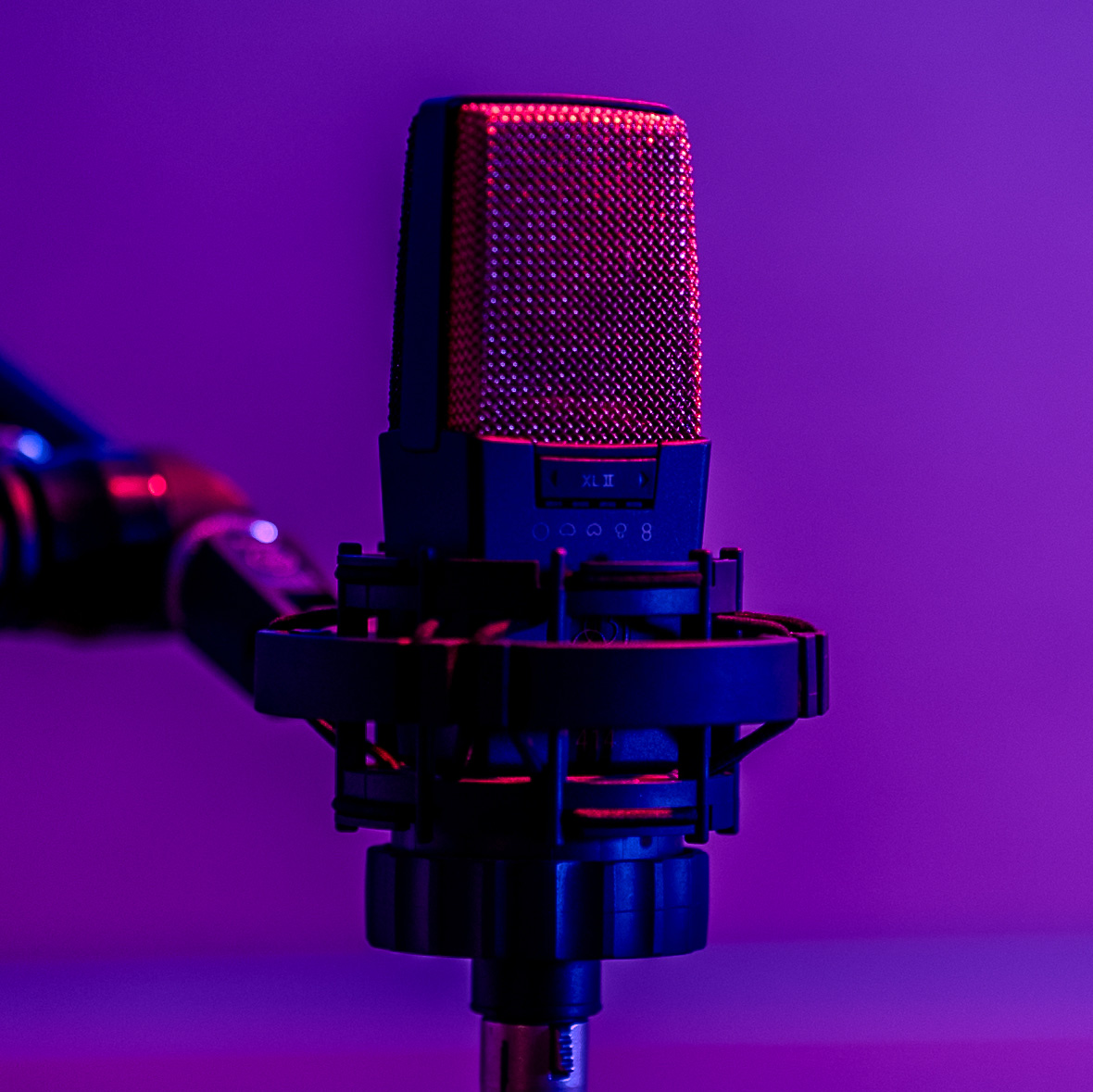
A condenser mic uses two plates: the diaphragm (front plate) and a fixed backplate. Together they form a capacitor. When sound waves move the diaphragm, the distance between plates changes, which changes the capacitance and produces an electrical signal.
Because this signal is very weak, condensers need power to run an internal amplifier. This is called phantom power (usually 48V, supplied by your audio interface).
Large-Diaphragm vs Small-Diaphragm
Condensers come in two sub-types:
| Property | Large-Diaphragm (LDC) | Small-Diaphragm (SDC) |
|---|---|---|
| Diaphragm size | 1" or larger | Under 1" (usually 0.5") |
| Sound character | Warm, full, slightly colored | Accurate, detailed, neutral |
| Best for | Vocals, voiceover | Acoustic guitar, cymbals, strings |
| Typical shape | Large body, side-address | Pencil/stick shape |
| Examples | Rode NT1-A, AT4040 | Rode NT5, AKG P170 |
Characteristics
| Property | Condenser Mic |
|---|---|
| Sensitivity | High -- captures fine detail |
| Frequency response | Wide and relatively flat |
| Self-noise | Varies (check specs -- lower is better) |
| Durability | Fragile -- handle with care |
| Phantom power | Required (48V) |
| Price range | $80 - $3,000+ |
| Best for | Vocals, acoustic instruments, overhead drums, room mics |
Why You'd Choose Condenser
Detail and clarity. Condensers capture the subtleties -- breath, finger noise on strings, the air around a vocal. This detail makes vocals sound present and alive in a mix.
Flat frequency response. A good condenser gives you an honest picture of the source, which gives you more flexibility in mixing.
Sensitivity. Quiet sources -- a whispered vocal, a soft fingerpicked guitar -- come through clearly on a condenser.
The Room Matters
Here's the catch: that sensitivity cuts both ways. A condenser mic in an untreated room will capture every reflection, every HVAC hum, every car driving by outside. If your room sounds bad, a condenser will tell you in brutal detail.
This is why we stressed acoustic treatment in our home studio setup guide. A treated room + condenser mic = professional recordings.
Popular Condenser Mics
| Model | Price | Sweet Spot |
|---|---|---|
| Audio-Technica AT2020 | ~$100 | Budget vocals, instruments |
| Rode NT1-A | ~$230 | Vocals (incredibly low noise) |
| AKG C214 | ~$360 | Vocals, instruments (versatile) |
| Audio-Technica AT4040 | ~$350 | Detailed vocals, acoustic guitar |
| Neumann TLM 102 | ~$700 | Premium vocals |
| AKG C414 | ~$1,100 | Everything (the Swiss Army knife) |
Ribbon Microphones
How They Work
A ribbon mic suspends a thin strip of corrugated aluminum (the "ribbon") between two magnets. Sound waves move the ribbon, which generates a current. It's similar in principle to a dynamic mic, but the ribbon is far thinner and lighter than a dynamic's diaphragm-coil assembly.
Characteristics
| Property | Ribbon Mic |
|---|---|
| Sensitivity | Moderate |
| Frequency response | Smooth, natural high-frequency roll-off |
| Self-noise | Low |
| Durability | Fragile (traditional) -- modern ribbons are tougher |
| Phantom power | Usually not required (check your model!) |
| Price range | $100 - $4,000+ |
| Best for | Guitar amps, brass, strings, room mics, vintage vocal character |
Why You'd Choose Ribbon
The most natural sound. Many engineers describe ribbons as sounding the closest to "being in the room." The smooth high-frequency roll-off avoids harshness that condensers sometimes introduce.
Guitar amps love ribbons. A ribbon mic on a cranked amp captures warmth and body without the ice-pick highs. The Royer R-121 on a guitar cab is one of the most beloved mic placements in rock recording.
Brass and strings. The gentle top end tames the natural brightness of trumpets, saxophones, and violins without needing EQ.
Ribbon Cautions
Traditional ribbons are fragile. A strong puff of air (or phantom power on some models) can stretch or break the ribbon element. Always check whether your ribbon mic is phantom-power safe before connecting it.
They need gain. Most ribbon mics have lower output than condensers, so you need a preamp with plenty of clean gain. Budget interfaces sometimes struggle here.
Modern ribbons have changed the game. Companies like sE Electronics and MXL now make affordable, durable ribbon mics that handle phantom power fine. The sE Electronics VR1 (~$500) and MXL R144 (~$100) have opened ribbons up to home studio users.
Popular Ribbon Mics
| Model | Price | Sweet Spot |
|---|---|---|
| MXL R144 | ~$100 | Budget ribbon, guitar amps |
| sE Electronics VR1 | ~$500 | Versatile modern ribbon |
| Royer R-121 | ~$1,500 | The gold standard for guitar amps |
| AEA R84 | ~$1,000 | Vocals, brass, vintage character |
Polar Patterns Explained
Polar patterns describe where a mic listens. This matters for isolation, room ambience, and feedback rejection.
| Pattern | Picks Up | Rejects | Best For |
|---|---|---|---|
| Cardioid | Front | Back and sides | Vocals, single instruments, live stage |
| Supercardioid | Tight front | Sides (some rear pickup) | Isolating sources in noisy environments |
| Omnidirectional | All directions equally | Nothing | Room ambience, natural capture, ensembles |
| Figure-8 (Bidirectional) | Front and back | Sides | Ribbon mics (natural pattern), duets, mid-side recording |
Most home studio applications use cardioid. It focuses on what's in front of the mic and rejects room reflections from behind. If you're recording vocals in a bedroom, cardioid is your friend.
Some higher-end condensers (like the AKG C414) offer switchable polar patterns, giving you versatility for different recording situations.
The Proximity Effect
When you get close to a directional mic (cardioid, supercardioid, figure-8), bass frequencies get louder. This is the proximity effect.
- Use it intentionally: Radio announcers and podcasters get close to dynamic mics to achieve that rich, warm voice
- Avoid it when unwanted: Singers who move around will get inconsistent bass. Use an omnidirectional pattern or maintain consistent distance
- It doesn't affect omni mics: Because omnidirectional mics aren't directional, they don't exhibit proximity effect
A typical vocal recording distance is 6-12 inches from a cardioid mic. Closer = more bass and more detail. Farther = more room sound and less proximity bass boost.
Handling Noise
Handling noise is the rumble you hear when you touch or move a microphone. It's caused by vibrations traveling through the mic body to the capsule.
- Dynamic mics have moderate handling noise -- manageable on a stand
- Condenser mics are more sensitive to vibration -- always use a shock mount
- Ribbon mics are the most sensitive -- shock mount is mandatory, and keep them on sturdy stands
A good shock mount isolates the mic from stand vibrations, foot stomps, and desk bumps. It's a $20-40 investment that dramatically cleans up your recordings.
Sweet Dreams Recommends
Sweet Dreams Recommends: Got your mic picked out? Put it to work in a professional environment. Book a recording session and let our engineers help you capture your best performance.
Which Mic Should You Buy First?
Here's the decision tree:
- 1Is your room treated?
- Yes -> Large-diaphragm condenser (Rode NT1-A, AT2020)
- No -> Dynamic (SM58, SM7B)
- 2What are you recording?
- Vocals -> LDC or dynamic
- Acoustic guitar -> SDC or LDC
- Electric guitar amp -> Dynamic (SM57) or ribbon
- Drums -> Combination (dynamic on snare/toms, SDC on overheads)
- Podcast/voiceover -> Dynamic (SM7B, RE20) or LDC
- 3What's your budget?
- Under $100 -> AT2020 (condenser) or SM57/SM58 (dynamic)
- $200-300 -> Rode NT1-A (condenser) or SM7B (dynamic)
- $300-500 -> AKG C214 (condenser) or sE VR1 (ribbon)
Pro tip: Your second mic should be a different type than your first. If you started with a condenser, grab a dynamic. Having both gives you options for every situation.
Sweet Dreams Recommends
Sweet Dreams Recommends: Looking for beats to record over with your new mic setup? Our beat store has professional instrumentals across every genre, ready for your vocals.
What's Next
Now that you understand microphones, it's time to learn what to do with the signal after it's recorded. In our next post, EQ Fundamentals: Shaping Your Sound, we'll break down the frequency spectrum and teach you how to use EQ to make every track sit perfectly in your mix.
This is Part 13 of our Music Production series. New posts publish weekly.
Tags